How to Erase Ink from Paper: Myths, Science, and Real Solutions

Panic is the universally shared first reaction when dark ink hits the wrong spot on an expensive 120gsm dot grid notebook. Whether it is a careless smudge on a legal document, a botched header in your bullet journal, or an accidental stroke across a handmade greeting card, the desperate urge to "make it disappear immediately" often leads to catastrophic paper fiber destruction.
Understanding exactly how to erase ink from paper requires completely ignoring viral internet "hacks" and instead adopting a blend of basic chemistry and delicate physical technique. Before we dive into the deep mechanisms of ink, if you have just made a mistake seconds ago, follow this emergency protocol:
- Blot Vertically, Never Rub: If the ink is still wet and pooling, immediately take a clean, dry tissue or microfiber cloth and press it straight down onto the stain. Lift it straight up. Rubbing horizontally will drive the pigment deeper into the microscopic cellulose fibers and create an unmanageable smear.
- Identify Your Ink Base: Look at the pen you just used. Is it a Japanese gel pen, an oil-based ballpoint, or a water-based fountain pen? Your removal strategy will fail if you do not match it to the ink's specific chemical composition.
- Step Away from Household Chemicals: Put down the acetone, the bleach, and the hand sanitizer. Using unauthorized solvents is the fastest way to burn a literal hole through your premium stationery.
Section 1: The Reality Check—Why DIY "Hacks" Destroy Your Journal
The internet is overflowing with quick-fix videos promising that common household items can magically erase pen ink. However, these tutorials usually test their methods on heavy fabrics or glossy cardboard—not the delicate, uncoated pages of a high-quality planner. Applying harsh solvents to writing paper will strip away its "sizing" (the protective coating that prevents ink from bleeding), leaving the page porous, warped, and completely ruined for any future writing attempts.

Auntie Mei's Warning: Avoid These Common Mistakes
1. Acetone (Nail Polish Remover): Acetone is a highly aggressive solvent. While it has a slight chance of breaking down the thick, paste-like oils found in very cheap ballpoint pens, it is catastrophic for paper. It rapidly degrades the structural integrity of the cellulose fibers. Even if it fades the ink, it will leave a permanent, translucent grease-like stain on your page that bleeds through to the other side.
2. Rubbing Alcohol (Isopropyl Alcohol): Many people attempt to use high-percentage rubbing alcohol to lift ink. Because modern gel inks are highly pigmented, the alcohol acts as a carrier fluid. Instead of removing the spot, the alcohol causes the ink to "feather" and rapidly expand outward. You will transform a tiny 1mm mistake into a massive, blurry, blue or black cloud that is impossible to conceal.
3. Lemon Juice or Bleach: These solutions rely on extreme acidity or alkalinity to bleach the color out of the dye. Not only are modern archival inks resistant to bleaching, but applying acid directly to your notebook guarantees that the paper will turn a sickly yellow color and become so brittle that it shatters when you turn the page years later.
Section 2: The Science of Ink—Why It Refuses to Leave

To successfully figure out how to erase ink from paper, you must first understand the enemy. Not all pens are created equal, and their inks interact with paper on a microscopic level in vastly different ways.
Gel Pens (The Stubborn Pigments): The most popular writing instruments today, such as the Zebra Sarasa Clip or the Pentel EnerGel, utilize water-based pigment inks. Instead of dissolving into the water, solid microscopic color particles (pigments) are suspended in a gel matrix. When you write, the water evaporates or absorbs into the paper, leaving the solid pigment particles physically wedged deep within the paper's fiber weave. This is why gel ink is often labeled "archival" or "check-safe"—it is chemically designed to be permanent and waterproof once dry. Solvents cannot dissolve these solid rocks of color.
Ballpoint Pens (The Oil Dyes): Standard ballpoints use a thick, oil-based paste mixed with chemical dyes. While slightly more susceptible to specific chemical solvents than gel pens, attempting to dissolve the oil usually just pushes the dye deeper into the paper.
Fountain Pens (The Water Dyes): Fountain pens use liquid, water-based dyes. If you are using standard fountain pen ink (not "bulletproof" or iron gall ink), the dye sits relatively close to the surface. Specific "Royal Blue" fountain pen inks can actually be made entirely invisible using a chemical ink eradicator pen, which alters the pH of the dye to make it transparent.
Section 3: Professional Solutions That Actually Work
Since we have established that chemical warfare against gel ink is a losing battle, we must rely on professional, physical methods to correct our mistakes while maintaining the aesthetic integrity of our journals.
Method 1: The Micro-Abrasive Shaving (For Tiny Dots)

If you have made a microscopic error—perhaps a misplaced period or a tiny tail on a letter—and you are using premium, thick paper (100gsm or higher), you can physically remove the top layer of the paper where the pigment rests.
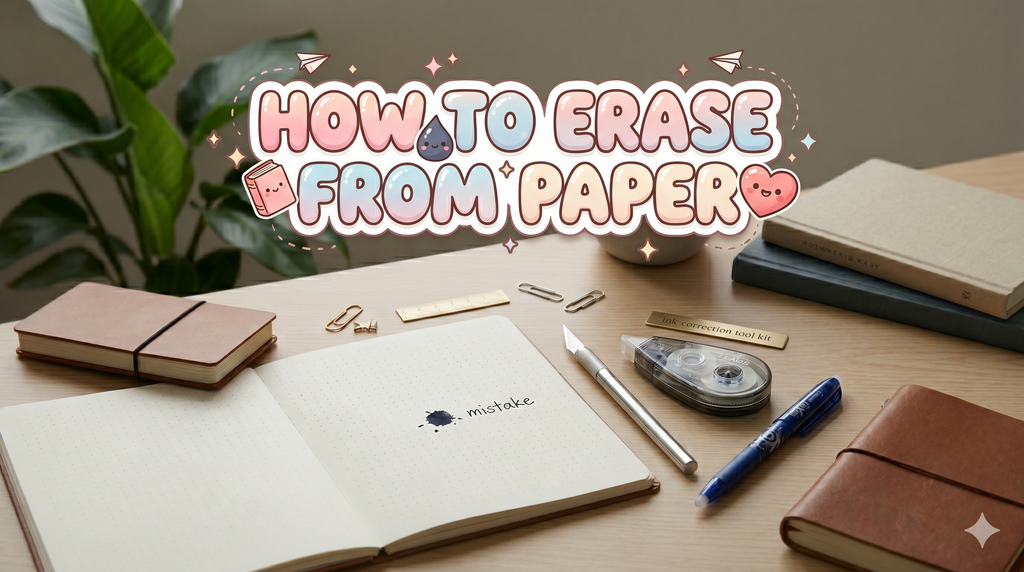
Use a specialized "sand eraser" (such as the Tombow Mono Sand Eraser) or an ultra-sharp precision craft blade. The technique requires a surgeon's touch: use extremely light, gentle, circular scraping motions to lift only the very uppermost fibers. Warning: This method inherently thins the paper. If you apply too much pressure, you will tear a hole straight through the page. Never attempt this on standard 70gsm or 80gsm copy paper.
Method 2: High-Opacity Correction Tape (The Minimalist Cover-Up)

When you have misspelled an entire word in gel ink, the absolute best, most professional solution is not removal, but pristine coverage. Throw away your liquid white-out; it takes forever to dry, creates a bumpy, ugly texture on the page, and ruins the tip of any pen you try to write over it with.
Invest in a premium Japanese dry correction tape. Look specifically for tapes that offer a 5mm width, as this aligns perfectly with the standard 5mm spacing of dot grid journals. High-end tapes, such as the Tombow Mono AIR, dispense a razor-thin, ultra-opaque layer of white film that adheres flawlessly to the paper. It allows you to immediately write over your mistake with your favorite gel pen without skipping, smudging, or tearing the tape.
Section 4: Preventive Care—Switch to Thermo-Sensitive Ink
If the constant fear of making permanent mistakes is giving you "blank page anxiety," the ultimate hack is to stop fighting permanent ink and switch your primary writing tool entirely.
The Pilot Frixion series has fundamentally disrupted the stationery industry through the invention of thermo-sensitive ink technology. Unlike standard pens that rely on abrasion or chemical destruction for correction, Frixion ink utilizes basic thermodynamics.

The ink is formulated with a microcapsule compound that reacts to temperature changes. By using the hard silicone "eraser" nub built into the back of the pen, you generate friction on the paper. Once the friction heats the ink to exactly 60°C (140°F), the chemical bonds shift, rendering the colored pigment completely transparent and invisible to the naked eye.
This process produces absolutely zero eraser dust, leaves the paper fibers 100% intact, and allows you to rewrite in the exact same spot infinitely. It is the holy grail for perfectionists, students, and bullet journalers who demand a flawless aesthetic.
Method Comparison Matrix: Making the Right Choice
| Removal Method | Effectiveness on Gel Ink | Paper Damage Risk | Auntie Mei's Verdict |
|---|---|---|---|
| Rubbing Alcohol | Low (Smudges severely) | High (Warping, bleeding) | ❌ Avoid completely |
| Acetone / Solvents | Medium (On ballpoint only) | Severe (Destroys sizing) | ❌ Never use on journals |
| Sand Eraser / Blade | High (For micro-dots only) | High (Thins the paper) | ⚠️ Use as a last resort |
| Premium Correction Tape | 100% (Full coverage) | Zero | ✅ Best for standard pens |
| Pilot Frixion (Heat) | 100% (Frixion ink only) | Zero | ✅ The ultimate solution |
Frequently Asked Questions (FAQ)
No. Standard rubber or vinyl erasers are specifically formulated to lift loose graphite particles that rest lightly on the surface of the paper. Pen ink, especially liquid and gel types, penetrates deep into the cellulose fibers. Using a regular eraser will only generate friction that smears the ink and eventually tears the paper.
Hairspray contains aerosolized alcohol, which gives it mild solvent properties. While it might occasionally lift cheap ballpoint ink from a polyester shirt, spraying it onto notebook paper is a disaster. The sticky resins and polymers in the hairspray will leave a permanent, hard, glossy stain on your page, making it impossible to write over.
Yes, but with limitations. A high-quality opaque white gel pen (like the Sakura Gelly Roll or Uni Posca extra fine) can be used to dot over microscopic errors. However, white ink takes significantly longer to dry than correction tape, and if the mistake is large, the texture of the dried white ink will be very noticeable and bumpy.
Because Frixion ink relies on temperature to remain invisible, extreme cold can reverse the chemical process. If you leave your journal in a freezing car during winter, or place it in a freezer that drops below -10°C (14°F), the thermal bonds will shift back, and your previously "erased" mistakes will magically reappear on the page.
Generally, no. Sharpies and other permanent markers use powerful alcohol-based carrier fluids to drive intense dyes completely through the thickness of the paper. Any chemical strong enough to lift permanent marker will immediately dissolve the paper itself. Your only options are physical coverage (correction tape) or covering the mistake with a decorative sticker.
You should never attempt to erase, scrape, or use white-out on a legal bank check. Modern checks are printed with security features that react to solvents and friction, causing the word "VOID" to appear or the background pattern to smear. If you make a mistake, securely shred the check and write a new one.
Baking soda mixed with a few drops of water creates a mild abrasive paste. While people recommend it for lifting stains from countertops, rubbing a wet paste onto your journal will instantly warp the page, break down the paper fibers, and cause massive water damage long before the ink is fully removed.
End the Erasure Struggle Today
Your time is far too valuable to spend it scrubbing away at delicate paper fibers. Embrace a flawless writing experience by upgrading your toolkit. Shop our curated collection of ultra-opaque correction tapes and revolutionary thermo-sensitive erasable pens.
Shop Erasable Pens & Correction Tools