
7 Best Kawaii Pens for Bullet Journaling in 2026 (No Bleed & Aesthetic)
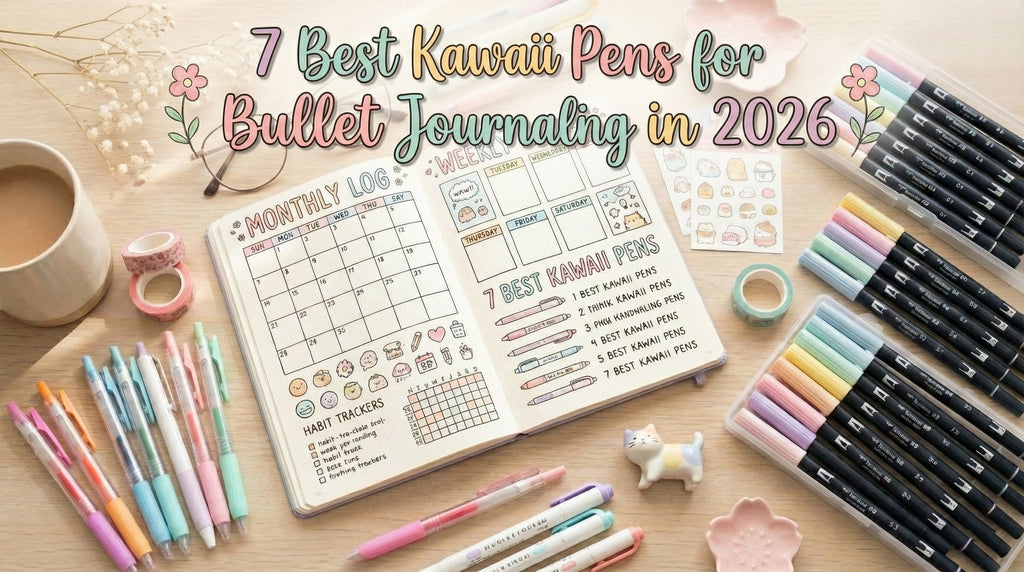
Stop ruining your spreads with ghosting ink. We tested the best smudge-free, bleed-proof stationery to help you build the perfect bullet journal.
To ensure these recommendations are actually "Bujo Friendly," we tested each pen on three common paper types: Standard 80gsm copy paper, 100gsm notebook paper, and 160gsm premium journal paper. We evaluated them for ghosting (seeing ink on the other side), bleeding (ink soaking through), and smear resistance using a 5-second swipe test. Testing was conducted in our stationery lab under controlled conditions for consistency.
Starting a bullet journal (BuJo) is exciting—it's a system that organizes your life while unleashing your creativity. Based on the method created by Ryder Carroll, bullet journaling combines planning, task management, and personal reflection into one customizable notebook. But there is one nightmare that haunts every beginner: Ghosting and Bleeding.
Imagine this: You spend two hours meticulously drawing a beautiful "Weekly Spread" with floral doodles. You are proud of it. But when you flip the page to start next week's log, you see a mess. The ink has soaked through, ruining the fresh page. Or worse, you use a ruler to draw a grid, and the black ink smears instantly across the page.
Not all pens are created equal. A great bullet journal pen needs to be precise for small grids and bullet symbols, quick-drying for rapid logging, and gentle enough not to destroy your paper. It should also be versatile enough to handle everything from daily task lists to elaborate monthly spreads.
In this comprehensive guide, we dive deep into the 7 best pens for bullet journaling that cover every need—from minimalist daily logging to artistic calligraphy headers. We've considered the unique requirements of bullet journalers, including the need for pens that work well with common BuJo layouts like future logs, monthly calendars, habit trackers, and collections.

💡 Key Takeaways (Your Quick Guide)
- Best Daily Writer: Pentel EnerGel (Smooth, dark, and dries instantly - perfect for rapid logging).
- Best for Grids & Layouts: Sakura Pigma Micron (The waterproof gold standard for drawing spreads).
- Best for Headers & Calligraphy: Tombow Dual Brush Pens (Essential for beautiful monthly headers).
- Best for Color Coding: Pilot Juice Gel Pen Set (Vibrant colors for task categorization).
- Best for Precision Highlighting: Uni Propus Window Highlighters (See-through tips for accurate highlighting).
- Best for Mistakes & Drafts: Pilot Frixion Series (Erase errors in your layouts cleanly).
- Best for Aesthetic Accents: Zebra Sarasa Clip Decoshine (Metallic ink for special touches).
- Bujo Rule #1: Always do a "Pen Test" on the very last page of your new notebook before starting your first spread!
📊 Quick Comparison: Top Picks for Bujo Addicts
| Product | Best Used For... | Ink Type | Bleed Risk | Drying Speed |
|---|---|---|---|---|
| Pentel EnerGel | Daily Logging & Rapid Logs | Liquid Gel | Low | Instant |
| Sakura Micron | Drawing Grids & Layouts | Pigment (Archival) | Zero | Fast |
| Tombow ABT | Titles & Art | Water-based | Low | Medium |
| Pilot Juice | Color Coding | Gel | Low | Fast |
| Uni Propus | Precision Highlighting | Fluorescent | Low-Medium | Fast |
| Pilot Frixion | Drafting & Mistakes | Thermo-Sensitive | Zero | Fast |
| Zebra Decoshine | Aesthetic Accents | Metallic Gel | Low | Medium |
🔬 What Makes a Pen "Bujo Friendly"? (The Science)
Before you buy, look for these three technical features to avoid ruining your notebook. These considerations are especially important for bullet journaling where you often work with 5mm grids and frequently flip through pages:
- Archival Quality (Pigment Ink): You want your journal to last for years as a record of your life. Dye-based inks can fade with sunlight exposure over time. Pigment-based inks (like the Sakura Micron) sit on top of the paper fibers rather than soaking in, making them waterproof and fade-resistant. This is crucial for important collections and memories you want to preserve.
- No Bleed-Through: The ink should absorb quickly without soaking to the other side. Alcohol markers (like Sharpies or Copics) are a "No-No" for most journals unless you have 160gsm paper, as they bleed instantly. Always stick to water-based or gel inks for standard bullet journals. Bleeding ruins the reverse side of your page, making it unusable for future spreads.
- Precision Tip: Bullet journaling involves a lot of small symbols (dots, squares, checkmarks) and 5mm grids. A bold tip (0.7mm or 1.0mm) is often too thick for these small spaces. We recommend 0.38mm or 0.5mm for the cleanest layouts. Needle tips offer even more precision for detailed trackers and tiny bullet symbols.
- Quick Drying Time: Left-handed writers and anyone who highlights need pens that dry within seconds. This is especially important when creating complex spreads where you might need to use rulers or highlight soon after writing.

Pentel EnerGel Liquid Gel Pen
Best for: Daily Logging & Rapid Logs
The Bujo Pain Point: Daily logging requires speed. You need to jot down tasks during a meeting or class quickly, but standard gel pens smear if you close the notebook too fast or brush your hand over them. This is especially frustrating when you're trying to rapid log throughout your day.
Why We Love It for Bullet Journaling: The Pentel EnerGel is legendary in the stationery community for a reason. It uses a "Liquid Gel" hybrid ink technology that combines the color vibrancy of gel with the instant drying time of a rollerball. It writes incredibly smooth and dark, making your simple to-do lists look professional and high-contrast. For bullet journalers, this means you can quickly add tasks to your daily log without worrying about smudging when you flip pages or add highlights.
- Instant Drying: Smear-proof even for left-handed writers - perfect for rapid logging.
- Saturated Black: Makes text pop off the page for easy reading of your daily tasks.
- Needle Tip Option: Available in 0.3mm, 0.5mm, and 0.7mm tips for precision bullet symbols.
- Refillable body reduces plastic waste - sustainable for long-term journaling.
- Available in multiple colors for color-coding different types of tasks.
- Can run out of ink faster than standard ballpoints due to high flow.
- The liquid ink may feather slightly on very thin paper (below 80gsm).
- Not completely waterproof - avoid watercolor washes over your writing.
Sakura Pigma Micron
Best for: Drawing Grids & Layouts
The Bujo Pain Point: You use a highlighter over your weekly grid lines, and the black ink smears, creating a muddy gray mess that ruins your aesthetic. Or you spend time drawing a perfect monthly calendar only to have it bleed through to the next page.
Why We Love It for Bullet Journaling: The Sakura Micron is widely considered the "Gold Standard" for bullet journalists and architects alike. It uses waterproof, archival pigment ink. Once it dries (which takes seconds), it is permanent. You can run mildliners, watercolors, or markers over it, and the black lines won't budge. Plus, the metal-clad tip is perfect for running along a ruler without bending. For bullet journal layouts like future logs, monthly calendars, and trackers, this pen ensures your lines stay crisp and clean.
- 100% Waterproof: Never smears under highlighters or water - perfect for highlighted tasks.
- Archival Quality: Won't fade or discolor over years - your journals will last.
- No Bleeding: Safe for most paper types including thin paper.
- Available in 8 precision sizes (005 to 08) for any layout element.
- Consistent ink flow from first to last use - reliable for long drawing sessions.
- The felt tip can be fragile—don't press too hard when drawing lines!
- Not as smooth writing as gel pens—has slight feedback on paper.
- Dries out if left uncapped (always recap immediately after use).
Tombow ABT Dual Brush Pens
Best for: Headers & Calligraphy
The Bujo Pain Point: You want those fancy modern calligraphy headers you see on Instagram for your monthly logs and collections, but regular markers just don't look right and bleed through your pages, ruining the next spread.
Why We Love It for Bullet Journaling: Tombow is the secret weapon behind 90% of the aesthetic journals you see online. It features two tips: a large, flexible brush tip for calligraphy strokes and a fine tip for corrections or details. The water-based ink is blendable, allowing you to create beautiful ombre effects or gradients in your headers. Crucially, unlike alcohol markers, they do not bleed through most 100gsm journals. With 108 colors available, you can create a color theme for each month in your bullet journal.
- Dual Tip Design: 2 pens in 1 (Brush + Fine) - versatile for headers and details.
- Huge variety of aesthetic colors (Pastels, Muted, Brights) - perfect for monthly themes.
- Blendable ink for artistic effects and shading in your headers.
- Self-cleaning tips (just scribble on paper to clean mixed colors).
- Water-based ink is less likely to bleed than alcohol markers.
- The pens are quite long—check if they fit your pencil case.
- Requires practice to master brush calligraphy techniques.
- Not waterproof—will run if water gets on the page.
Pilot Juice Gel Pen Set
Best for: Color Coding & Trackers
The Bujo Pain Point: You want to separate "Work," "Personal," "Health," and "Learning" tasks by color in your daily log or habit tracker, but many colored pens skip, scratch, or are too light to read under indoor lighting. Inconsistent ink flow makes filling in small tracker boxes frustrating.
Why We Love It for Bullet Journaling: The Pilot Juice series is famous for its vibrant, juicy ink flow. The pigment-based gel ink makes the colors pop off the page, making them ideal for color-coding your monthly logs or filling in habit trackers. The clip is also spring-loaded and sturdy, so you can clip it securely onto your thick journal cover without it snapping. With 36 colors available (including pastels and neons), you can create a comprehensive color system for different categories in your bullet journal.
- Vibrant, saturated colors that are easy to read - perfect for color-coded tasks.
- Smooth writing (no "railroading" or skipping) - consistent for tracker boxes.
- Water-resistant once fully dry - won't smear if you accidentally spill water.
- Sturdy binder clip that won't break easily - attaches to journal cover.
- Wide range of colors including limited editions - great for seasonal themes.
- Takes a second longer to dry than the EnerGel (wait before highlighting).
- Some lighter pastel colors can be harder to see in low light.
- Not as long-lasting as some professional-grade pens for heavy use.
Uni Propus Window Highlighters
Best for: Precision Highlighting
The Bujo Pain Point: You try to highlight a specific date in your monthly calendar or a completed task in your daily log, but you overshoot and highlight the text next to it, making it look sloppy and unprofessional. This is especially annoying when working with small 5mm grids.
Why We Love It for Bullet Journaling: This highlighter has a genius design feature: a clear window in the tip. You can literally see through the highlighter tip as you draw, so you know exactly where to stop. It's a game-changer for keeping your bullet journal layouts neat and precise. The "Light Colors" set is soft and aesthetic, avoiding that jarring neon office look. Double-ended with both a broad chisel tip and fine point, it's versatile for highlighting headers or underlining important tasks.
- See-through window ensures perfect stops and accuracy in small spaces.
- Soft, aesthetic colors (easy on the eyes, perfect for journals).
- Double-ended (Broad tip + Fine tip for underlining or small highlights).
- Dries quickly to prevent smudging underlying ink.
- Less likely to bleed than traditional highlighters on 100gsm paper.
- Some lighter colors might be too faint for quick scanning of completed tasks.
- The window can get stained with ink over time with heavy use.
- Slightly more expensive than basic highlighters.
Pilot Frixion Erasable Markers
Best for: Mistakes & Drafts
The Bujo Pain Point: You color in the wrong habit tracker square by mistake, or your schedule changes requiring you to move tasks, and now your beautiful spread has ugly scratch-outs or needs white-out tape that creates bumps and texture on the page.
Why We Love It for Bullet Journaling: These are felt-tip markers that erase completely. They are perfect for doodling, coloring trackers, or tentative planning. If your schedule changes, just use the built-in cap eraser to rub it out, and the ink vanishes. No mess, no crumbs, no white-out tape needed. The thermo-sensitive ink disappears with friction heat, leaving your page looking untouched. Perfect for perfectionists and planners who need flexibility in their bullet journal layouts.
- 100% Erasable: Thermo-sensitive ink disappears with friction - perfect for layout drafts.
- Great for "tentative" planning and sketches before finalizing spreads.
- Won't bleed through paper (ink sits on top) - safe for all paper weights.
- Available in 24 colors for colorful erasable planning.
- Built-in eraser in the cap for convenience - always with you.
- Ink can reappear in freezing temperatures (don't put your journal in the freezer!).
- Erasures can sometimes leave faint "ghost" marks on some papers.
- Not suitable for archival or important permanent notes.
Zebra Sarasa Clip Decoshine
Best for: Aesthetic Accents
The Bujo Pain Point: Your journal feels a bit boring and utilitarian, but you aren't an artist and don't know how to spice it up without buying tons of stickers or washi tape. You want to add special touches to important dates or completed goals.
Why We Love It for Bullet Journaling: The "Decoshine" series features metallic ink that shimmers beautifully on the page. It's surprisingly versatile—you can use it for special headers, accents, underlining important tasks, or even writing on black paper journals. It adds that instant "Kawaii" factor without needing any drawing skills. The comfortable rubber grip and reliable clip make it a pleasure to use, and the gel ink flows smoothly without skipping. Perfect for making completed milestones or special events stand out in your journal.
- Metallic/Shiny ink adds instant flair and elegance to special entries.
- Writes on dark/black paper (opaque ink shows up well) - great for dark themes.
- Smooth Sarasa clip body and comfortable grip for long journaling sessions.
- Available in 10 beautiful metallic shades - perfect for special occasion logging.
- Clip design makes it easy to attach to journals - always accessible.
- Not for daily writing (too sparkly for professional notes).
- Metallic particles can sometimes clog the tip if not used regularly.
- Slightly more expensive than regular Sarasa pens.
📚 Buying Guide: How to Choose the Right Tools for Your Bullet Journal
Choosing stationery is personal, but understanding the mechanics can save you money and frustration. Here is our expert breakdown of ink, tips, and paper based on years of bullet journaling experience and testing. Remember that the original bullet journal method emphasizes simplicity and functionality over decoration.
1. Understanding Tip Sizes (The Grid Rule)
The standard bullet journal grid is 5mm. Your pen tip size dictates how neat your layout looks inside these boxes. Here's a practical guide for different bullet journal elements:
- 0.25mm - 0.3mm (Ultra Fine): Best for intricate doodles and very small handwriting in your collections. Can feel "scratchy" on rough paper. Perfect for adding tiny details to spreads or writing in the margins of your daily log.
- 0.38mm (Fine): The "Sweet Spot" for most bullet journal grids and symbols. It draws a clean line that doesn't dominate the page. Perfect for the Sakura Micron 01 or Pilot Hi-Tec-C. Ideal for drawing trackers and writing task lists.
- 0.5mm (Medium): The standard for daily writing and rapid logging. It's smoother than 0.38mm and easier to read, but might be too thick for detailed trackers with small boxes. Great for general use in your bullet journal.
- 0.7mm+ (Bold): Great for headers and emphasis in your monthly logs, but avoid for grids as it can look messy and takes longer to dry. Best for titles and section headers in your collections.
2. Check Your Paper Weight (GSM) for Bullet Journaling
GSM stands for "Grams per Square Meter." It measures paper density and thickness, which directly affects pen performance in your journal:
- 70-80gsm (Standard Notebooks like Moleskine): Common in cheaper notebooks but prone to ghosting and bleeding. Stick to ballpoints (like Uni Jetstream) or erasable pens. Avoid heavy gel pens and markers. Not ideal for serious bullet journaling with multiple pen types.
- 100gsm - 120gsm (Bujo Standard like Leuchtturm1917): The ideal balance for most bullet journalists. Safe for almost all gel pens (EnerGel, Sarasa) and mild highlighters without bleeding. Used in popular journals like Scribbles That Matter. Good for most bullet journal needs.
- 160gsm+ (Premium like Archer & Olive): "Cardstock" feel with minimal ghosting. You can use almost anything, including light watercolor washes and paint markers. Perfect for artistic bullet journaling with mixed media.
3. Ink Type Matters for Different Bullet Journal Uses
Different ink formulations behave differently on paper, which affects their suitability for various bullet journal applications:
- Pigment Ink: Archival, waterproof, and fade-resistant. Sits on paper surface. Best for permanent notes and important collections. (Sakura Micron)
- Dye-based Ink: Vibrant colors but can fade over time and may not be waterproof. Often used in colorful gel pens for trackers and color-coding.
- Gel Ink: Smooth writing with vibrant colors. Can take slightly longer to dry than ballpoint but offers better color payoff. Great for daily logging.
- Water-based Ink: Blendable and less likely to bleed, but not waterproof. Perfect for brush pens and artistic headers in your monthly logs.
Did you misspell a header or draw a line in the wrong spot? Don't rip out the page—here are aesthetic fixes that experienced bullet journalers use:
- The "Creative Cover-up": Turn mistakes into intentional design elements. A stray mark can become a flower, a cloud, or part of a border. This embraces the bullet journal philosophy of adaptability.
- The "Patch" Method: Use a piece of coordinating Washi Tape or a decorative sticker to cover the error, then write over it. This adds character to your spread and hides mistakes beautifully.
- The "Dutch Door": If a page is ruined, cut it in half or fold it creatively to make a "Dutch Door" layout that adds interactive elements to your journal.
- Use Erasable Pens for Drafts: Plan layouts with Pilot Frixion first, then trace over with permanent pens once you're happy with the design. This is especially helpful for complex monthly spreads.
Frequently Asked Questions (FAQ)
A: Leuchtturm1917 (80gsm paper): Most of the pens will work, but you may experience some ghosting. We recommend the Pilot Frixion or Pentel EnerGel (0.5mm) to minimize ghosting. The Sakura Micron also performs well. Moleskine paper is quite thin (70gsm), so avoid heavy markers; stick to ballpoints or the Sakura Micron for the best results. For optimal bullet journaling with multiple pen types, consider upgrading to 100gsm+ paper.
A: For rapid logging (quickly capturing tasks, events, and notes), you need a pen that:
- Dries instantly to prevent smudging when flipping pages
- Has a comfortable grip for extended writing sessions
- Produces a clear, dark line for easy reading
- Works reliably without skipping
The Pentel EnerGel and Uni-ball Jetstream (not featured but excellent) are top choices. A 0.5mm tip is ideal—thin enough for small symbols but smooth enough for quick writing.
A: Ghosting (seeing the shadow of ink on the reverse side) is often a paper issue, not a pen issue. To minimize ghosting in your bullet journal:
- Switch to a notebook with 120gsm or 160gsm paper (like Archer & Olive or Notebook Therapy)
- Use lighter colored pens or ballpoints instead of bold gel pens
- Choose finer tip sizes (0.38mm instead of 0.7mm)
- Embrace ghosting as part of the bullet journal aesthetic—many seasoned journalers don't mind it
Remember that some ghosting is normal with most notebooks under 120gsm.
A: Mistakes are part of the bullet journal process! The system is designed to be adaptable. Here are solutions:
- Keep some white Washi Tape or a white gel pen (like the Uni-ball Signo Broad) in your kit to cover up small errors
- Use the Pilot Frixion pens for your layouts so you can erase mistakes as you go
- Turn the page and start fresh—bullet journals are meant to be functional, not perfect
- Practice the bullet journal principle of "migration" by moving to a new page and transferring what still matters
Ryder Carroll's original bullet journal method emphasizes progress over perfection.
A: Generally no. Crayola markers are water-based but often bleed through standard journal paper. Sharpies are alcohol-based and will bleed through almost any standard journal paper instantly. Always stick to water-based markers (like the Tombow ABT) or pigment liners (like the Sakura Micron) featured in this list. If you must use these markers, place a scrap paper underneath to protect following pages.
A: For drawing trackers, calendars, and grids, you need precision and reliability. The Sakura Pigma Micron is the best choice because:
- It comes in multiple precise sizes (01, 03, 05 are most useful)
- It's waterproof, so you can highlight over it without smudging
- It has a durable tip that works well with rulers
- It doesn't bleed through most papers
For habit trackers with small boxes, the 01 (0.25mm) size is perfect.
A: Yes! We specifically considered left-handed writers in our testing. The Pentel EnerGel and Sakura Micron are excellent for lefties because they dry almost instantly, preventing smudging. The Uni Propus Window Highlighters are also great since you can see exactly where you're highlighting. For brush pens like Tombow, left-handed writers might need to adjust their hand position or use a smudge guard. Quick-dry pens are essential for left-handed bullet journalers to avoid smearing their daily logs.Learn more about which pens are suitable for left-handed people《Best Pens for Left-Handed People》
Ready to Start Your Bullet Journal Journey?
Don't let the fear of messing up stop you from creating a system that organizes your life and expresses your creativity. With the right tools, you can build beautiful, functional spreads that you'll love using every day.
Remember: The perfect bullet journal is the one you actually use. Start simple, be consistent, and let your style evolve naturally.
Shop All Aesthetic Pens for Your Journal 🛍️Free shipping on orders over $70 • 30-day satisfaction guarantee

)